People check their weight for all kinds of reasons. Some are trying to lose a few kilos. Others just want reassurance that things are steady. And almost everyone who looks into weight at some point comes across BMI. Many start with a simple bmi calculator to plug in their numbers and see where they stand. That’s usually when the bigger question shows up: is bmi different for men and women or is the same formula used for everyone?
It sounds like a small detail, but it opens up a much wider conversation about biology, body fat, muscle mass, and how health is measured in the first place.
Is BMI Different for Men and Women? Understanding the Core Question
So, is bmi different for men and women in terms of calculation? Technically, no. The formula for body mass index is the same for both sexes. BMI is calculated by dividing weight in kilograms by height in meters squared. That equation does not change whether the person is male or female.
Yet when people ask, is bmi different for men and women, they are usually not asking about the formula itself. They are asking whether the meaning of the result differs. And that’s where things become more layered.
The same BMI score can represent different body compositions in men and women. A man and a woman with identical height and weight will have the same BMI number. Still, the woman is likely to have a higher body fat percentage, while the man may have more lean muscle mass. That difference matters when interpreting health risk.
To understand this better, it helps to look at how body mass index is structured.
Standard BMI Formula
| Measurement | Formula |
|---|---|
| Metric | Weight (kg) ÷ Height (m²) |
| Imperial | (Weight (lb) ÷ Height (in²)) × 703 |
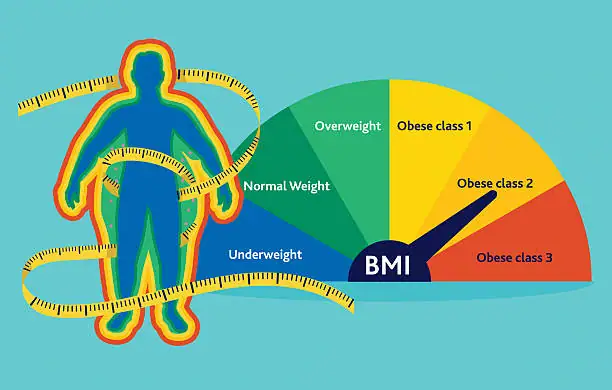
The output falls into common BMI categories that apply to adults in general.
Standard BMI Categories
| BMI Range | Category |
|---|---|
| Below 18.5 | Underweight |
| 18.5 – 24.9 | Normal weight |
| 25 – 29.9 | Overweight |
| 30 and above | Obesity |
These ranges don’t change between men and women. The classification remains the same. What changes is how that number reflects fat distribution and health risk.
How Body Composition Shapes the Difference
The question “does bmi differ between males and females” often arises because men and women store fat differently. Women naturally carry a higher body fat percentage than men. This is not a flaw in BMI; it’s biology.
Hormones play a role. Estrogen influences fat storage patterns, often concentrating fat around hips and thighs. Men tend to accumulate more abdominal fat. Even at the same BMI, these patterns can alter cardiovascular risk profiles.
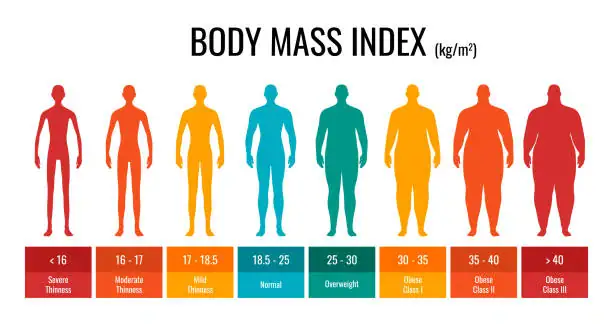
When someone searches about bmi for women, they are often concerned that the chart may not reflect female physiology. The BMI chart itself remains identical, but interpretation sometimes varies in clinical settings.
Here’s a simplified comparison:
| Factor | Men | Women |
|---|---|---|
| Average Body Fat % (Healthy Range) | 10–20% | 18–28% |
| Muscle Mass | Higher on average | Lower on average |
| Fat Distribution | More abdominal | More hips & thighs |
Because of these differences, two people with the same body mass index may not carry the same metabolic risk.
A Closer Look at BMI for Men and Women
When discussing BMI for men and women, the nuance is often overlooked. Doctors don’t usually use separate BMI charts for adult males and females, but they do consider body composition.
For example, a muscular male athlete might have a BMI in the overweight range due to muscle mass. That does not necessarily indicate excess fat. On the other hand, a woman with a “normal” BMI could still have a higher body fat percentage and reduced muscle mass, which may influence metabolic health.
This is one reason people question why bmi is different for men and women in practical use, even if the math is unchanged.
BMI is essentially a weight and height ratio. It does not distinguish between fat mass and lean mass. That limitation becomes more noticeable when comparing sexes.
Healthy BMI Range and Its Interpretation
The healthy BMI range for adults sits between 18.5 and 24.9. That standard applies equally to men and women. But the health implications behind that number are sometimes slightly different.
A BMI of 23 might reflect solid muscle and low body fat in a physically active man. In a sedentary woman, it might reflect higher fat mass and lower muscle mass. Both are technically within a healthy BMI range, yet their long-term health risks could differ.
This is where additional metrics enter the picture, such as waist circumference or body fat percentage measurements.
Comparison of BMI vs Body Fat
| BMI Category | Possible Male Body Fat % | Possible Female Body Fat % |
|---|---|---|
| Normal | 10–20% | 18–28% |
| Overweight | 20–25% | 28–35% |
| Obese | 25%+ | 35%+ |
These are approximate ranges and vary by age and ethnicity. Still, they highlight why the same BMI number does not always mean the same thing.
Age, Timing, and Context Matter More Than We Admit
When evaluating body mass index, age makes a difference. Younger adults often carry more lean muscle. Older adults may lose muscle mass while maintaining weight, altering their BMI interpretation.
Some people use tools like a timezone converter when planning international meetings, adjusting numbers depending on context. BMI works in a similar way. The number is fixed, but interpretation depends on age, sex, and body composition.
For adolescents, BMI charts are actually sex-specific. Boys and girls follow different percentile curves. That’s an important detail. For adults, the same fixed BMI categories are used, even though physiological differences remain. So when people ask, does bmi differ between males and females, the answer is partly no for adults in calculation, but yes in interpretation and clinical context.
Obesity Classification and Risk Differences
Obesity classification begins at a BMI of 30. That threshold applies to both men and women. Yet research shows that men often develop obesity-related complications at lower body fat percentages due to central fat accumulation. Abdominal fat is strongly linked with heart disease and metabolic syndrome. Men are more likely to store fat around the abdomen, which can increase risk even within the same BMI categories.
Women, especially premenopausal women, may carry more peripheral fat. That fat distribution is not risk-free, but it is metabolically different. This is one reason why doctors may evaluate waist-to-hip ratio alongside body mass index.
Why BMI Is Different for Men and Women in Real-World Use
When people search why bmi is different for men and women, they are usually sensing that something about the numbers feels uneven.
BMI was originally developed using population data that did not deeply separate sex-specific fat distribution. Over time, researchers realized that body fat percentage differs naturally between sexes, even at identical BMI values.
A 27 BMI might reflect:
- A muscular man with moderate fat
- A woman with higher fat proportion
- An older adult with lower muscle mass
The number alone does not tell the full story.
That’s why health professionals may combine BMI with tools like waist measurement or even basic tools such as an age calculator to interpret risk in a broader context.
Beyond BMI: Other Measurement Tools
Some people turn to other measurements to get clarity. While BMI remains widely used because it’s simple, it has limits.

In the same way someone might use a number base converter when switching between binary and decimal systems, health professionals sometimes “convert” BMI into a broader health picture using additional indicators.
Alternative or complementary measures include:
- Waist circumference
- Waist-to-hip ratio
- Skinfold thickness
- Body fat percentage via bioelectrical impedance
- DEXA scans
Each method offers more detail about fat distribution and lean mass. Still, BMI remains common because it’s easy to calculate and useful for population-level analysis.
Body Fat Percentage: The Hidden Variable
Body fat percentage often clarifies confusion about BMI for men and women. Women require a certain amount of essential fat for hormonal function and reproductive health. Men require less essential fat.
Here’s a rough breakdown of essential fat:
| Sex | Essential Body Fat |
|---|---|
| Men | 2–5% |
| Women | 10–13% |
That baseline difference alone shows why comparing raw BMI numbers without context can be misleading.
A woman with 25% body fat might be perfectly healthy. A man with 25% body fat would fall into a higher risk category. So while is bmi different for men and women may seem like a simple yes-or-no question, the real answer sits somewhere in between.
Does BMI Differ Between Males and Females in Medical Guidelines?
In adult medical guidelines, BMI thresholds for overweight and obesity classification remain the same for men and women. Public health agencies use identical cutoffs. That consistency helps with large-scale data collection and research. It allows governments to track trends across populations without creating separate systems.
At the same time, clinicians often interpret results differently when assessing individual patients. Muscle mass, hormonal status, and fat distribution all influence medical decisions. So, does bmi differ between males and females? Not officially in adult charts. In practice, doctors think more broadly than the number alone.
Athletes, Muscle Mass, and Misclassification
One of the most common criticisms of body mass index involves athletes. A muscular male bodybuilder may fall into the obese category based purely on BMI.
Women athletes can face similar misclassification, though it happens less often due to average differences in muscle mass. This limitation reinforces that BMI categories reflect statistical risk, not personal identity. They were never designed to diagnose individuals without context.
Cultural and Ethnic Variations
Ethnicity also affects how BMI correlates with health risk. Some Asian populations experience metabolic risk at lower BMI thresholds. In response, certain health organizations have introduced adjusted guidelines for specific ethnic groups.
Sex differences intersect with these variations. A petite Asian woman with a BMI of 23 may face different metabolic risks than a taller European man with the same BMI.
This layered reality makes the simple question is bmi different for men and women more complex than it first appears.
When BMI Works Well
Despite criticism, BMI remains useful. It gives a quick screening indicator. It helps identify population-level obesity trends. It provides a starting point for conversation. For many adults within average body composition ranges, BMI aligns reasonably well with health risk. It becomes less accurate at extremes of muscle mass or unusual fat distribution.
When BMI Falls Short
BMI does not account for:
- Muscle vs fat distinction
- Bone density
- Fat distribution
- Hormonal differences
- Age-related muscle loss
These gaps matter when interpreting differences between men and women. A lean, muscular man and a sedentary man may share the same BMI. Their long-term health risks differ significantly. The same can apply between women with similar BMI values but different muscle mass.
Putting the Question in Perspective
So, is bmi different for men and women? The formula is the same. The chart is the same. The obesity classification cutoffs are the same. Yet interpretation shifts once body composition enters the conversation. Women naturally carry higher body fat percentage. Men generally carry more lean muscle. These biological patterns influence how a BMI number reflects health risk. That does not make BMI useless. It simply means the number should not stand alone.
Final Thoughts
Body mass index was never meant to be perfect. It was meant to be practical. The shared BMI chart allows easy comparison across large groups. But when it comes to individual health, context matters. Sex, age, muscle mass, fat distribution, and lifestyle all shape what that number really means.
If someone is asking, is bmi different for men and women, they are already thinking beyond the formula. That instinct is reasonable. The math is universal. The biology is not. A BMI score is a starting point, not a final verdict. For both men and women, understanding body composition alongside BMI gives a clearer, more grounded view of health.