Figuring out space sounds simple until you actually grab a tape and start measuring corners that aren’t straight. People search this when they’re planning flooring, painting, or just trying to understand their home better. If you’ve ever used a bmi calculator for quick numbers, this feels similar in spirit, just applied to rooms instead of bodies. You measure, plug in numbers, and get a clearer idea of what you’re working with.
Table of Contents
Understanding How do you Calculate Square Footage
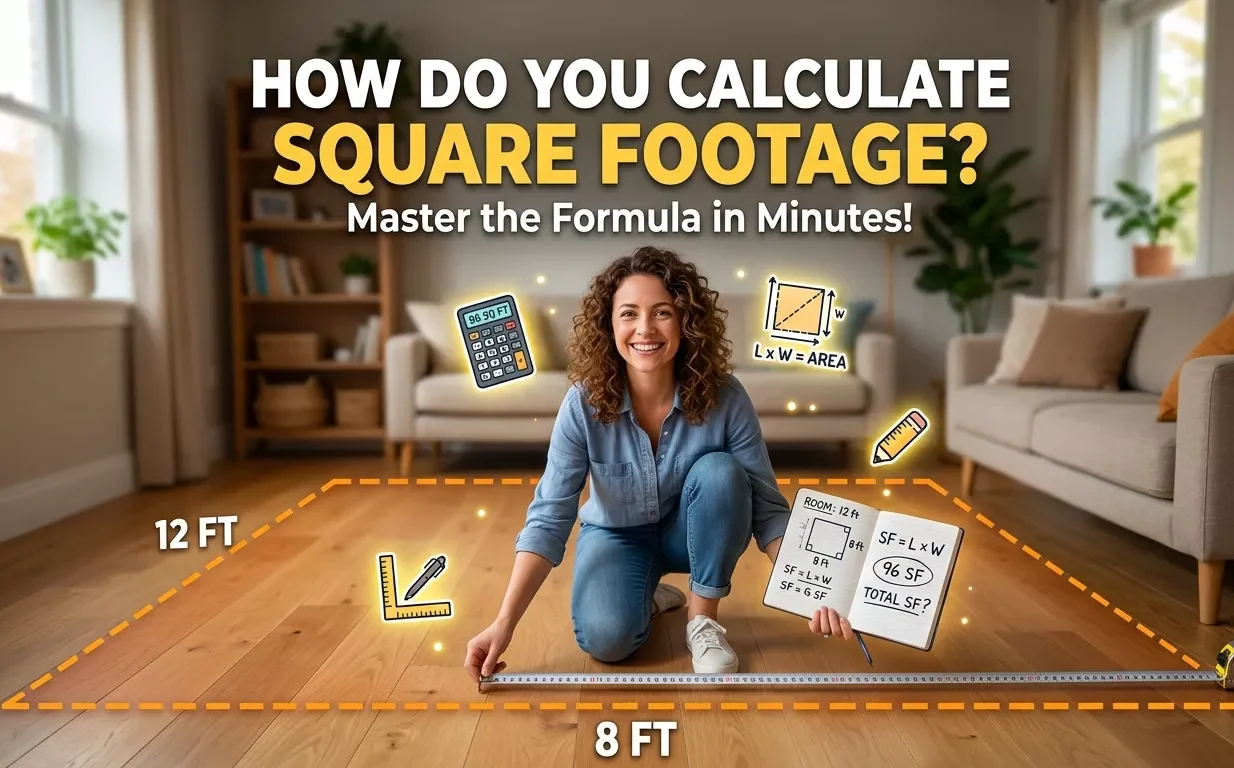
At its core, How do you Calculate Square Footage comes down to area calculation. You measure length and width, then multiply. That’s it, at least for basic shapes. Still, real spaces are rarely perfect rectangles, so things can get a bit uneven.
Square footage is simply the total surface area measured in square feet. When people talk about floor area calculation, they’re referring to how much usable space exists in a room, building, or even land.
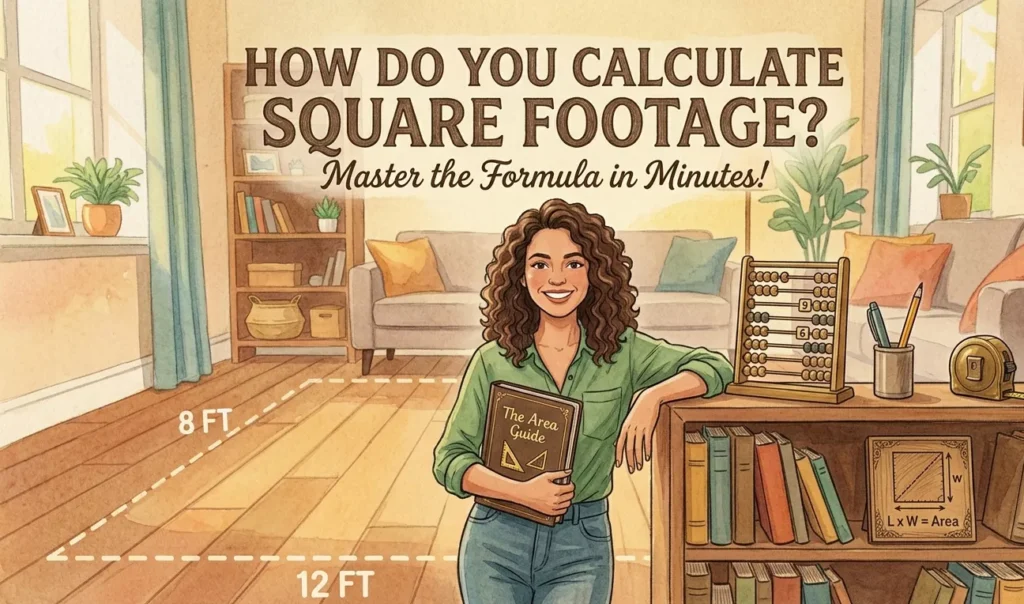
The standard square foot formula looks like this in simple terms:
Length × Width = Square Footage
It’s a basic area formula, but it becomes more interesting when rooms have angles, curves, or multiple sections.
Why square footage matters more than people think
Square footage isn’t just a number for real estate listings. It affects how much material you buy, how furniture fits, and even how comfortable a room feels.
If you miscalculate square feet, you might end up with too little flooring or too much paint. Both are annoying in different ways.
It also connects with planning tools like a percentage calculator, especially when estimating waste or extra material. For example, adding 10% extra flooring is common practice.
The basic method to calculate square feet of a room
Start simple. Take a rectangular room.
- Measure the length (in feet)
- Measure the width (in feet)
- Multiply the two numbers
So if your room is 12 feet long and 10 feet wide:
12 × 10 = 120 square feet
That’s your total square footage. This is the easiest way to calculate square feet and works for most standard rooms.
Square foot formula for different shapes
Not every room is a neat rectangle. Some are L-shaped or oddly designed. In those cases, you break the space into smaller sections. Here’s a simple table to make sense of it:
| Shape Type | Formula | Example Result |
|---|---|---|
| Rectangle | Length × Width | 10 × 12 = 120 |
| Square | Side × Side | 10 × 10 = 100 |
| Triangle | (Base × Height) ÷ 2 | 10 × 8 ÷ 2 = 40 |
| Circle | π × radius² | ~78.5 sq ft |
| Irregular Shape | Divide into smaller rectangles | Add all parts |
This is where area calculation becomes a bit more hands-on. You sketch the room, split it into manageable pieces, and add everything together.
How to measure square footage for irregular rooms
Irregular spaces confuse a lot of people. But the trick is not to treat the room as one shape. Break it down. Imagine an L-shaped room. You can divide it into two rectangles. Measure each one separately, then add them together. That’s your total square footage.
Some people even draw rough sketches. It doesn’t have to be perfect. Just enough to keep track of measurements. This method shows up often in floor area calculation, especially in older homes where layouts aren’t uniform.
Tools that make room measurement Easier
You don’t always need advanced tools, but they can help.
- Tape measure (basic but reliable)
- Laser distance measurer (faster, more accurate)
- Mobile apps for home measurement
- Graph paper for sketching layouts
Even something like a timezone converter mindset applies here small errors can throw off results if you’re not careful with units. Always measure in the same unit. Mixing feet and inches without converting properly causes mistakes.
Common mistakes when calculating square footage
People don’t usually get the formula wrong. They get the details wrong. One common issue is forgetting to convert inches into feet. For example, 6 inches is 0.5 feet, not 6 feet. That changes everything. Another mistake is skipping irregular sections. A small corner or alcove still counts toward square footage. Also, measuring only once can lead to errors. Walls aren’t always straight. Measuring twice gives better accuracy.
Converting square meters to square feet
Sometimes you’ll see measurements in square meters instead of square feet. Converting between them is simple.
1 square meter = 10.764 square feet
So if a room is 20 square meters:
20 × 10.764 = 215.28 square feet
This kind of conversion shows up often in global listings or construction projects. It’s similar to using an age calculator where you switch units but keep the logic consistent.
Using square footage for home projects
Square footage plays a role in almost every home project. If you’re installing tiles, you need accurate square foot calculations to know how many tiles to buy. Add 5–10% extra for cuts and waste.
For painting, square footage helps estimate how much paint is needed. Usually, one gallon covers about 350–400 square feet. Carpet installation also depends heavily on accurate room measurement. Even something like insulation or drywall relies on floor area calculation.
Estimating material using square foot formula
Here’s a quick table to show how square footage connects with materials:
| Project Type | Coverage Estimate |
|---|---|
| Paint | 350–400 sq ft per gallon |
| Tiles | Based on tile size + 10% extra |
| Carpet | Exact square footage + padding |
| Flooring | Add 5–10% for waste |
This is where knowing how to calculate square feet becomes practical, not just theoretical.
Real-life example of square footage calculation
Let’s say you have a room that’s 15 feet long and 12 feet wide.
15 × 12 = 180 square feet
Now imagine there’s a small closet inside, measuring 3 × 4 feet.
3 × 4 = 12 square feet
Total square footage becomes:
180 + 12 = 192 square feet
It’s small additions like this that people often miss.
How to handle multi-room calculations
If you’re measuring an entire house, treat each room separately. Calculate square footage for each room, then add everything together. Living room + bedroom + kitchen + hallway = total home measurement This method keeps things manageable and avoids confusion.
Square footage in real estate and pricing
Square footage often determines property value. Bigger homes generally cost more, but price per square foot matters too.
For example:
| Property Size | Price | Price per sq ft |
|---|---|---|
| 1000 sq ft | $100,000 | $100 |
| 1500 sq ft | $135,000 | $90 |
Even though the second home is larger, it’s cheaper per square foot. This is why accurate square footage calculation is important in buying or selling property.
How square footage affects layout decisions
Knowing your space helps with planning furniture and design. A 200 square foot room feels very different from a 120 square foot one. Layout decisions depend on available space. It also helps avoid overcrowding. People often underestimate how much room furniture actually takes.
Square footage vs usable space
Not all square footage is usable. Some areas, like staircases or built-in storage, count toward total area but aren’t always functional. This distinction matters when planning layouts or renovations.
Advanced tip: measuring curved or complex areas
Curved walls or unusual layouts require approximation. You can divide curved areas into smaller shapes or use formulas like circle area. It won’t be perfect, but it gives a close estimate.
Checking your calculations
Always double-check your numbers. Measure twice, calculate once, then review again. It sounds repetitive, but small errors can lead to big differences.
Even something like an energy converter approach applies here—precision matters when converting or calculating values.
Quick recap in simple terms
Square footage is just area. Measure length and width, multiply, and adjust for shape. Break complex spaces into smaller parts. Add everything together. Double-check your measurements. That’s really all there is to it, even if it feels messy at times.
Final Thoughts
Once you do it a few times, it becomes almost automatic. The first attempt might feel slow, especially with irregular rooms, but it gets easier.
Understanding square footage gives you control over space. Whether you’re renovating, buying materials, or just curious, it’s one of those skills that keeps coming up again and again.